Fasting schedules
16:8 intermittent fasting: a schedule you can actually keep
How to choose your 8-hour eating window, what to eat, what results to expect, and how to make 16:8 fit work, family, and weekends.
The 16:8 method gives you an 8-hour eating window and a 16-hour fast every day. In practice, most of the fast is dinner-to-bed and sleep. You are usually moving one meal, not white-knuckling an entire day without food.
Its popularity comes from that simplicity. There are no special fasting days to remember and no separate weekday and weekend rules. But the clock alone does not choose a good schedule or guarantee weight loss.
How 16:8 works
Choose an 8-hour period for all meals, snacks, and caloric drinks. For the other 16 hours, stick with water and other non-caloric drinks such as black coffee or plain tea. Repeat roughly the same window each day.
A noon–8pm window, for example, means lunch at noon, an optional snack, dinner before 8pm, then no calories until noon the next day. Moving the window earlier does not change the 16:8 math.
Pick the window around your immovable meal
Do not copy a stranger’s clock. Find the meal your job, training, medication, or family makes hardest to move and protect it.
| Eating window | Often fits | Watch for |
|---|---|---|
| 8am–4pm | Early risers, early workouts, little need for evening meals | Dinner and social events become difficult |
| 10am–6pm | A late breakfast plus an early dinner | Work or family dinner may run past the cutoff |
| Noon–8pm | People who want a normal dinner and prefer skipping breakfast | The first meal can turn into an oversized lunch |
There is some evidence that earlier eating may align better with daily rhythms in glucose control, but a theoretically ideal window is not useful if it removes the meal that matters most to you. Adherence comes first. Use the fasting calculator to test different start and finish times.
A realistic way to reach 16 hours
If you currently eat from 7am until 10pm, switching directly to noon–8pm removes seven eating hours at once. That often feels less like a routine and more like a dare. Compress gradually instead.
- Spend several days at 12:12 and stop eating after dinner.
- Move to 14:10 by delaying breakfast or finishing dinner earlier.
- Try 16:8 when 14 hours no longer requires much attention.
You can also stay at 14:10. In fasting, a schedule that feels almost boring is often a better long-term tool than one that feels impressive.
What to eat during the 8-hour window
Eight hours can hold two substantial meals and a snack, or three smaller meals. Either pattern works. What matters is that the window contains enough nutrition without becoming eight hours of continuous grazing.
- Anchor each meal with protein. Eggs, yogurt, fish, poultry, tofu, beans, and lean meat make a shortened day more filling and help support lean tissue.
- Keep fiber visible. Fruit, vegetables, beans, and whole grains add volume and make the next fasting period easier.
- Include ordinary carbohydrates and fats. 16:8 is not automatically keto, low-carb, or low-fat.
- Drink normally. Do not enter the fast already thirsty because you treated the last hour as a feeding deadline.
Does 16:8 cause weight loss?
It can, mainly when the shorter window causes you to eat less without feeling as though you are dieting all day. Research does not show that an 8-hour window reliably beats other ways of creating a similar calorie deficit. In one 12-week randomized trial, 16:8 without other changes was not significantly better for weight loss than a regular meal schedule. A separate 12-month trial found time-restricted eating and calorie restriction produced similar losses.
That is not a verdict against 16:8. It is a description of its real job: making a useful boundary. If skipping breakfast simply leads to a larger lunch, extra snacks, and the same daily calories, the scale may not move.
Common mistakes
Starting with the hardest possible version
Going straight from breakfast-at-7 to lunch-at-noon creates a difficult first week that says little about whether a gentler schedule could work.
Treating 8pm as a last call
Eating an extra meal because the window is about to close defeats the structure. Finish dinner when satisfied; you do not need to stockpile calories for the morning.
Ignoring liquid calories
Sweetened coffee, juice, alcohol, and smoothies can quietly erase the reduction from dropping a meal. See what breaks a fast for the detailed version.
Forcing the same window every day
Consistency helps, but a meal with friends is not a failed protocol. Move the window, shorten that day’s fast, and return to normal tomorrow. A system should absorb real life.
What results should you expect?
In the first days, any quick scale change is likely to include water and the amount of food in your digestive system. Judge the trend over at least three or four consistent weeks. A gradual change is easier to sustain than a dramatic drop, and the CDC notes that steady weight loss is more likely to stay off.
If you are keeping the window but not seeing progress, use our fasting weight-loss checklist before making the fast longer.
16:8 is not for everyone. Avoid fasting during pregnancy or breastfeeding, if you are under 18 or underweight, or if it worsens disordered eating. If you have diabetes or take medication affected by food timing, speak with your clinician before changing your schedule. Stop if fasting makes you dizzy, faint, or unwell.
Sources
A target you can actually hit
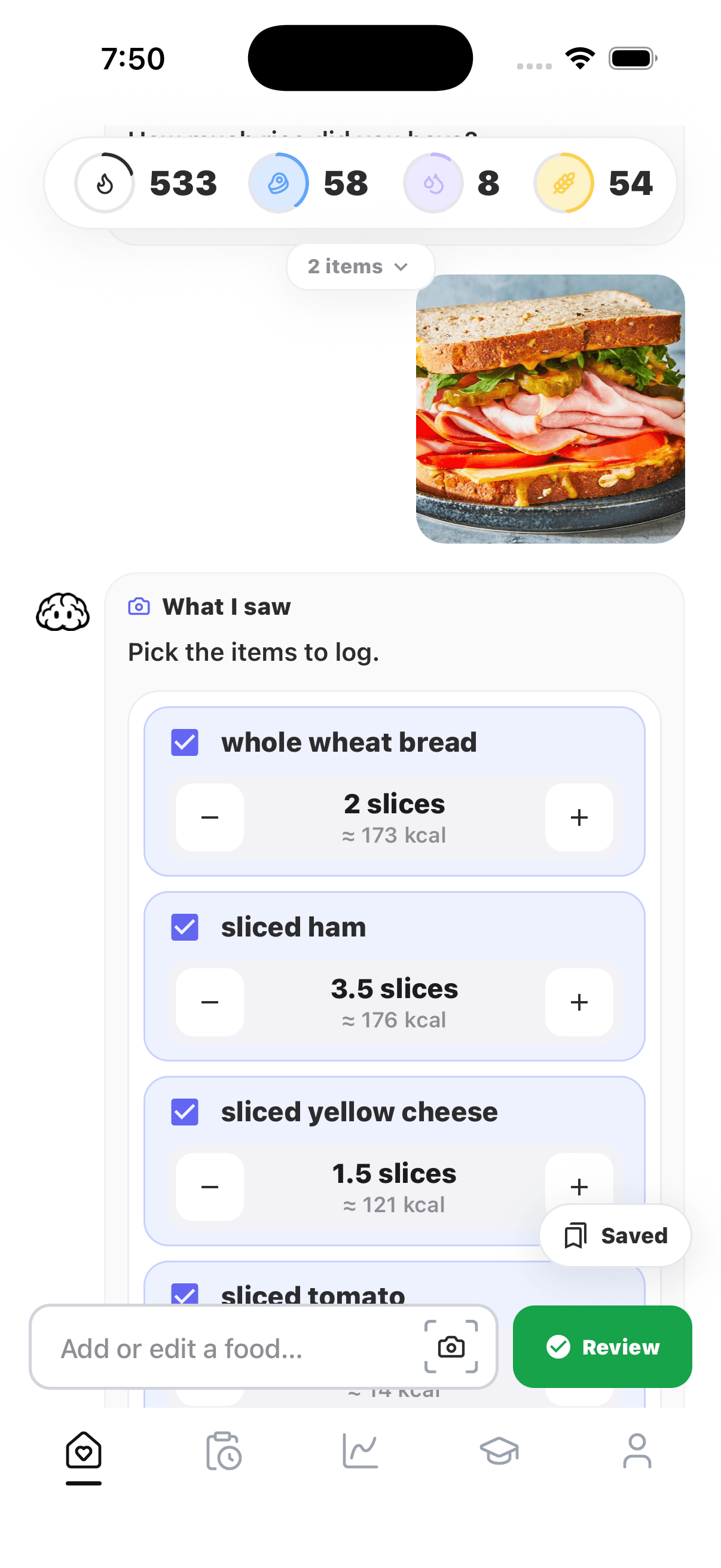
Snap the meal. It does the numbers.
A calorie goal only works if logging is effortless. Photograph what you're eating and Fastiq fills in the calories, protein, carbs, and fat.