Weight loss
Why am I not losing weight with intermittent fasting?
A practical checklist for when the scale stops moving: calories, weekends, water weight, protein, sleep, and when to adjust your fasting window.
Keeping a fasting window and seeing no change on the scale is frustrating, but it is not mysterious. Intermittent fasting controls time. Weight loss also depends on how much energy comes through the window, how consistently the pattern is repeated, and whether you have watched the trend long enough to see past normal water changes.
Do not make the fast longer yet. Work through this checklist in order; the first fix is usually more useful than jumping from 16:8 to one meal a day.
1. You may be judging the scale too quickly
Body weight can move independently of body fat for days at a time. Sodium, carbohydrate intake, bowel contents, menstrual-cycle changes, and a hard workout can all change how much water you carry. A low weigh day followed by a normal one can look like a gain when neither number says much about fat.
Weigh under similar conditions and compare weekly averages. Give a new routine at least three or four consistent weeks before calling it a plateau. If the average is slowly falling, the plan is working even when individual mornings are noisy.
2. The eating window may contain the same calories as before
Fasting does not make calories consumed later disappear. It works for weight loss when removing eating hours also removes enough food or drink to create an energy deficit. Randomized studies help clarify this: when calories were deliberately kept the same, time-restricted eating did not produce more weight loss than a usual eating pattern.
That does not mean you must count forever. Log an ordinary seven-day sample — including oils, dressings, drinks, bites while cooking, and the weekend — to see whether the window is changing your total intake. The TDEE calculator gives you a starting estimate to compare against.
3. You are arriving at the first meal too hungry
A fast that ends in an urgent, oversized meal may simply move calories from morning to afternoon. The usual culprit is a window that is longer than your current routine supports.
Shorten the fast for a week and make the first meal predictable. Start with protein, produce, and a high-fiber carbohydrate instead of eating directly from packages while deciding what the meal will be. A calm 14:10 schedule can produce a larger real-world deficit than a 20-hour fast followed by four hours of rebound eating.
4. Drinks and small extras are doing large work
Liquid calories are easy to miss because they do not resemble a meal. A sweetened coffee, juice, smoothie, or a couple of alcoholic drinks can replace the calories you expected to save by skipping breakfast. Oils, nut butter, dressings, cheese, and handfuls of snacks are similarly easy to underestimate.
Do not remove all of them. Measure the calorie-dense ones for a week so your mental estimate has something to calibrate against. During the fast, keep drinks genuinely non-caloric; our fasting drinks guide covers the common edge cases.
5. Weekends may be cancelling weekdays
A modest weekday deficit can be balanced by two restaurant meals, drinks, and a looser window on Saturday and Sunday. That is arithmetic, not a character flaw. The answer is not necessarily to make weekends joyless; it is to see the whole week.
Choose one weekend anchor: keep the same closing time, keep the first meal consistent, or plan the social meal and eat normally around it. “Flexible” works better when it has one edge.
6. Your meals may not be filling enough
A short eating window built around low-protein, low-fiber foods can keep you hungry all afternoon. You may technically eat twice and still snack continuously between those meals.
- Put a clear protein source in every meal.
- Include fruit or vegetables more than once a day.
- Use beans, oats, potatoes, or whole grains for satisfying carbohydrate.
- Plate snacks instead of eating from the bag.
- Leave room for enjoyable foods so the routine does not become brittle.
The goal is not perfect food. It is making the window naturally end because you have eaten enough, not because the clock caught you hungry.
7. Sleep, stress, medication, or a health condition may be involved
Sleep and stress can change appetite, food choices, activity, and how manageable a fast feels. Some medications and medical conditions can also affect weight. If your routine has not changed but your weight, hunger, energy, or other symptoms have changed sharply, bring that pattern to a healthcare professional rather than trying to out-fast it.
The CDC includes sleep and stress management alongside nutrition and physical activity as parts of healthy weight loss. These are not side quests; they influence how consistently the food plan happens.
8. Your body is smaller now
If you have already lost weight, maintaining the smaller body generally requires less energy than maintaining the larger one. A calorie target that created a deficit months ago may now be close to maintenance. Recalculate using your current weight and review portions before tightening the clock.
The BMI calculator can provide one broad screening measure, while the TDEE calculator estimates current maintenance needs. Neither is a diagnosis or a perfect measurement; both are starting points for a trend you observe in real life.
A two-week plateau reset
- Keep your current fasting window; do not extend it.
- Record morning weight and compare a seven-day average.
- Log all food and caloric drinks for one representative week.
- Plan the first meal before the fast ends.
- Choose one consistent rule for the weekend.
- Include protein and produce in each main meal.
- Keep normal movement in the week, including strength work if suitable.
- Review the average after two weeks and change one variable.
If intake is above your estimated needs, reduce a small repeatable piece — a drink, an unplanned snack, or a portion you will not miss. If intake already appears low and the trend remains flat, check the estimate and the logging before cutting further. Food labels, portions, and energy equations all have error.
When to change the fasting window
Make the window shorter only when it would remove a specific, recurring eating period. Moving from 14:10 to 16:8 might help if breakfast is mostly habit and skipping it does not cause a larger lunch. It is unlikely to help if you already struggle with hunger and overeating when the current fast ends.
You can also make the fast shorter. If 16:8 causes rebound eating, poor training, or an all-or-nothing weekend cycle, a stable 14:10 may work better. Read how the common fasting windows compare before deciding.
Get individual help when the situation calls for it. Speak with a clinician or registered dietitian if weight changes are unexplained, you have persistent fatigue or other symptoms, you take medication affected by food, or restriction is becoming distressing. Fasting is not appropriate during pregnancy or breastfeeding, for people who are underweight or under 18, or when it worsens an eating disorder. This article is general information, not medical advice.
The bottom line
A plateau does not mean intermittent fasting is broken. It means the current routine is producing roughly the result you see. Measure the trend, inspect the full week, and improve the meals before adding more restriction. The best adjustment is the smallest one you can still imagine doing six months from now.
Sources
One number is noise
Watch the trend, not the morning.
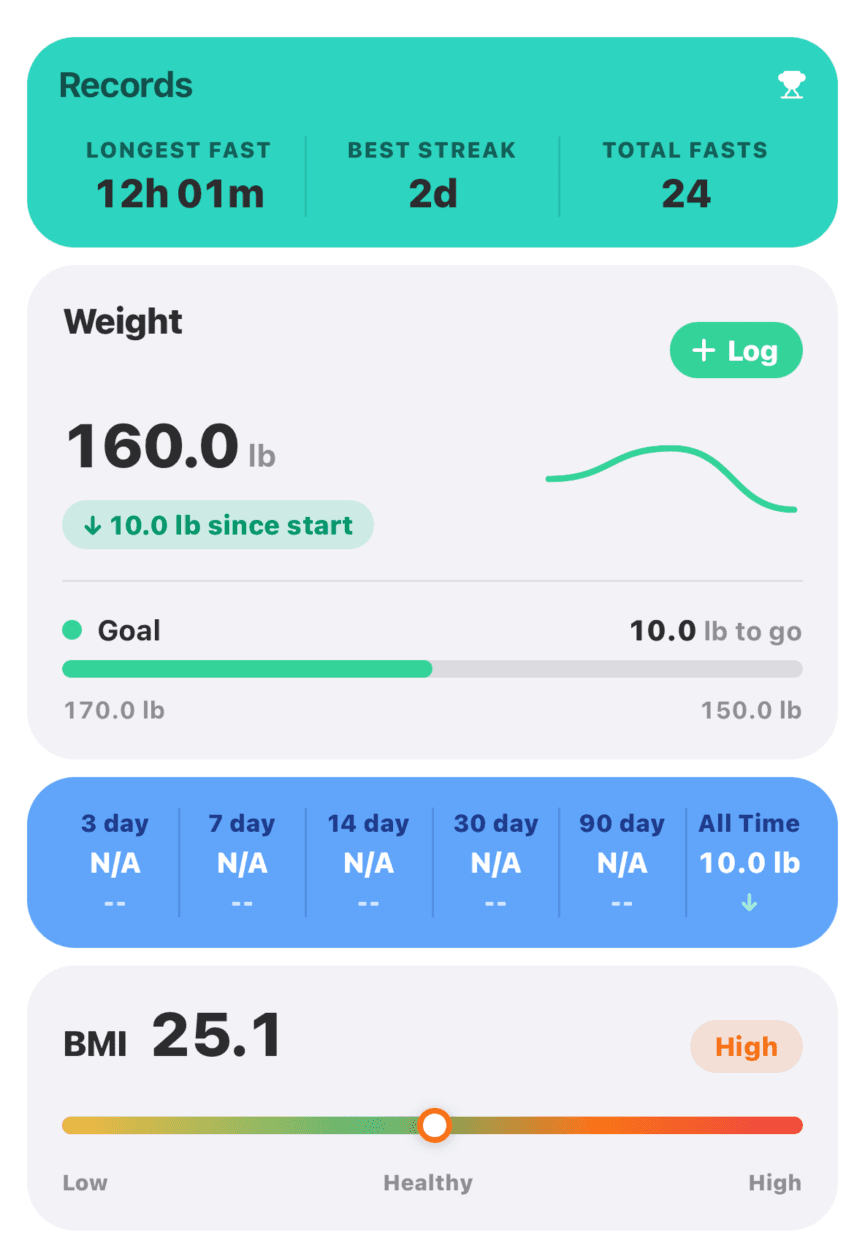
Fastiq charts weight and BMI over weeks, next to your fasting streak and macro averages, so you can see what's actually working.