Getting started
Intermittent fasting for beginners: start without overthinking it
A no-hype beginner's guide to intermittent fasting: how it works, which schedule to choose, what to eat, and how to start safely.
Intermittent fasting sounds more technical than it is. You choose a block of the day for eating, and outside that block you do not consume meaningful calories. There are no compulsory foods, powders, or complicated meal rules.
The hard part is not understanding the rule. It is choosing a version that fits your actual life. A modest schedule you can repeat usually beats an aggressive one that turns every dinner invitation into a negotiation.
What intermittent fasting actually is
Intermittent fasting describes when you eat, not a particular list of foods. The most common version is time-restricted eating: all meals and snacks fall within a consistent daily window. Other approaches include alternate-day fasting and the 5:2 pattern, but those are more disruptive and rarely the best place to begin.
A fasting window may help with weight loss because it removes some opportunities to eat — late-night snacks, a rushed breakfast, or both. It is a structure for eating fewer calories, not a way around energy balance. In a 12-month randomized trial, an 8-hour eating window and daily calorie restriction produced similar average weight loss. That is useful context: fasting can work, but it is not uniquely magical.
Start with 12:12, then earn the next step
A 12:12 schedule means fasting for 12 hours and eating within the other 12. Finish dinner at 8pm and have breakfast at 8am. Many people already do this accidentally, which is precisely why it is a good first week: you learn to stop eating after dinner without also fighting through a long morning.
- Week 1: 12:12. Close the kitchen after dinner and keep the same start time every morning.
- Week 2: 14:10. Move breakfast one hour later and dinner one hour earlier, or make the entire two-hour change on one side.
- Week 3 onward: decide. Stay at 14:10 if it feels natural. Try 16:8 only if you want a tighter boundary and can still eat well inside it.
There is no prize for reaching 16 hours. The best window is the shortest one that simplifies your day without making you compensate later. Our guide to every common fasting window compares the tradeoffs side by side.
Choose the eating window before you choose the fast
Start with the meals you care about keeping. If family dinner happens at 7pm, an early 7am–3pm window is unlikely to last. If breakfast is when you feel most focused and hungry, forcing yourself to wait until noon makes little sense.
Three workable examples:
- Early: 8am–4pm. Suits early risers and people who do not need dinner to be social.
- Middle: 10am–6pm. Keeps a late breakfast and an early dinner.
- Late: noon–8pm. The easiest option for preserving a normal evening meal.
Use the intermittent fasting calculator to work backward from your preferred first or last meal instead of doing clock arithmetic every day.
What you can have during the fast
Water, unsweetened sparkling water, black coffee, and plain tea are the uncomplicated choices. A small amount of milk may be irrelevant to a weight-loss goal even though it technically contains calories. Sugary drinks, cream-heavy coffee, alcohol, and snacks end the fast.
Do not let a five-calorie question distract you from the whole day. Our full guide to what breaks a fast covers coffee, gum, sweeteners, supplements, and medications.
What to eat when the window opens
You do not need a ceremonial “fast-breaking” food after an ordinary overnight fast. Eat a normal meal. The combination most likely to keep the next few hours calm is protein, high-fiber carbohydrate, produce, and some fat: eggs with whole-grain toast and fruit, yogurt with oats and berries, or chicken, rice, and vegetables.
Protein matters because a shorter window can make it harder to fit enough into the day. Spread it across two or three meals instead of treating the final hour as a race to catch up. Fasting does not improve a diet made mostly of foods that leave you hungry.
What the first two weeks feel like
Hunger often arrives at the time you normally eat, whether or not you urgently need energy. That pattern can soften as the schedule becomes familiar. Staying hydrated, eating enough at meals, and keeping busy during the former snack period all help.
Mild hunger is expected. Dizziness, fainting, confusion, persistent weakness, or feeling unwell are not milestones to push through. Stop the fast and eat. If symptoms repeat, talk with a healthcare professional before trying again.
How to tell whether it is working
Give a sustainable schedule two to four weeks before judging it. Track behaviors first: how many days you kept the window, whether evening snacking fell, and whether meals still felt normal. If weight loss is a goal, compare weekly weight averages rather than two isolated mornings; water, sodium, and digestion can hide the trend for days.
If nothing changes after several consistent weeks, the next move is usually to inspect portions and drinks — not immediately jump to a 20-hour fast. The TDEE calculator can give you a starting estimate for daily energy needs.
A simple beginner plan
- Pick a 12-hour overnight fast you can repeat seven days a week.
- Remove calories outside the window, especially evening snacks.
- Build two or three balanced meals around protein and fiber.
- After one week, extend to 14 hours only if the first step felt easy.
- Review the pattern after a month, not after a difficult Tuesday.
Check before you start. Fasting is not appropriate for everyone, including people who are pregnant or breastfeeding, under 18, underweight, or managing an eating disorder. If you have diabetes, take glucose-lowering medicine, or use medication that needs food, plan any fasting change with your clinician. This article is general information, not medical advice.
Sources
Keep reading in the app
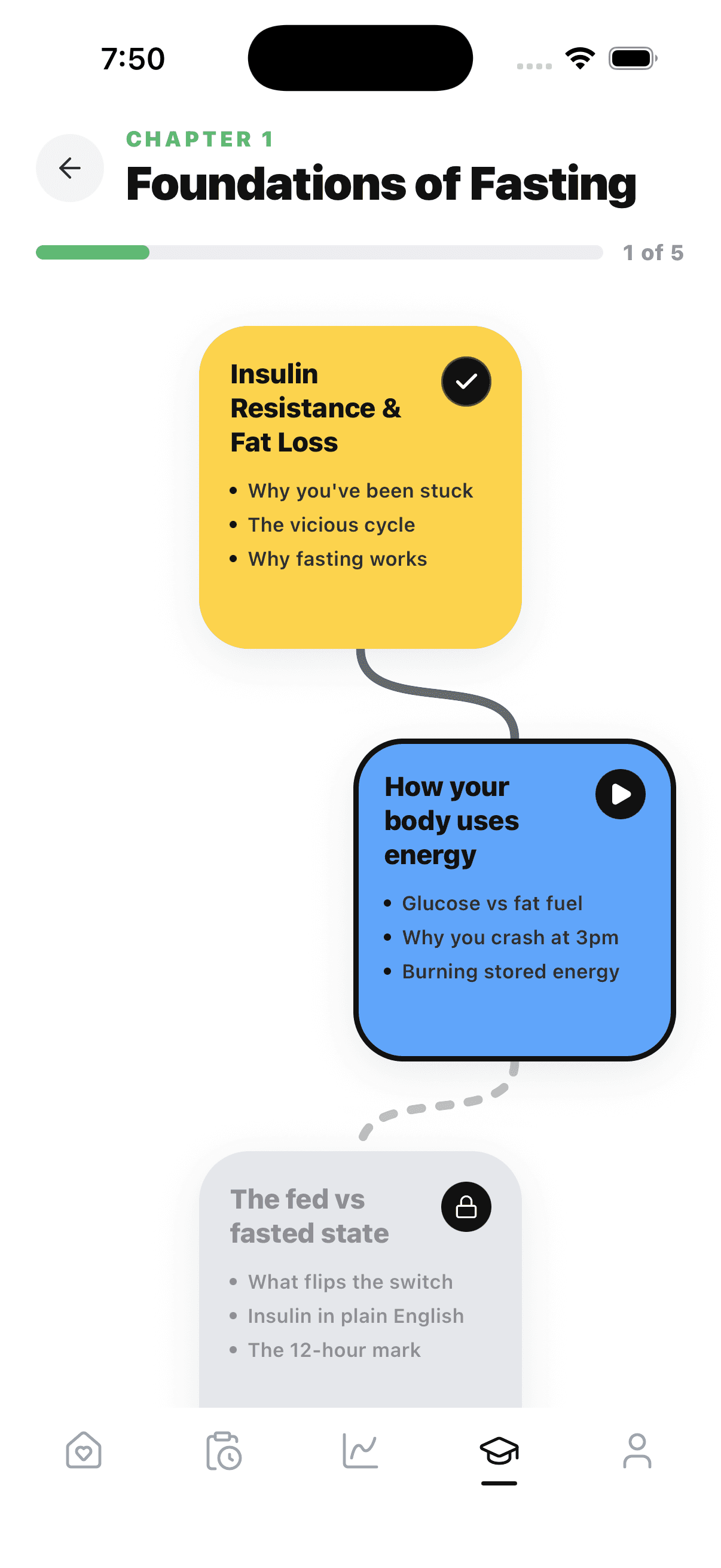
Short lessons on why fasting works.
Fastiq has the science built in — bite-sized chapters you can finish on a coffee break, with your progress saved as you go.